The Joint Pain Nobody Told You Was Part of Perimenopause

Resting a Painful Joint Is Almost Exactly Wrong in Midlife
She backs off her running, then her strength training, then the hikes. Six months of sensible caution produces a woman measurably worse off than the one who walked in. Muscle is the shock absorber for every joint it crosses.
Last Updated September 2026
Your hands ache when you wake up and loosen after twenty minutes. One shoulder has quietly lost range of motion and you cannot point to the day it started. Your knees complain on stairs they never complained about. Your hips hurt after sitting through a meeting. There is no injury, no fall, no new sport, and no single joint bad enough to explain the whole picture. If that is your last two years, you are not imagining it and you are not falling apart.
You are describing a recognized pattern. Joint pain, stiffness, tendon problems, and loss of muscle strength cluster during the menopause transition, and in 2024 a group of orthopedic and menopause researchers proposed grouping them under a single name, the musculoskeletal syndrome of menopause. September is Pain Awareness Month, which makes it a good time to say plainly what most midlife women are never told: this is common, it is connected, and it is worth a real evaluation rather than a referral for each joint in turn.
The Pattern Has a Name
In the October 2024 issue of Climacteric, Wright, Schwartzman, Itinoche, and Wittstein proposed the term musculoskeletal syndrome of menopause to describe the constellation of arthralgia, loss of muscle mass, loss of bone density, and progression of osteoarthritis that tracks with declining estrogen. Their central figure is the one I want every woman in my practice to know: more than 70 percent of women will experience musculoskeletal symptoms during the menopause transition, and about 25 percent will be disabled by them.
Seventy percent. That is not a rare presentation. That is the majority of women passing through midlife, most of whom are told, one joint at a time, that this is simply what aging feels like.
A note on precision, because I care about it: "musculoskeletal syndrome of menopause" is a proposed clinical framework in the peer-reviewed literature, not a billing code or a formal diagnostic category with agreed criteria. It is useful because it gives clinicians a reason to look at the whole pattern. It is not a label to apply to yourself and stop investigating.
What It Actually Looks Like
Patients rarely walk in and say "my joints hurt." They say some version of this:
Morning stiffness in the hands and fingers that eases within about half an hour
Grip strength that has noticeably changed, showing up as dropped mugs or jars that will not open
A shoulder that hurts at night and has lost overhead reach, on one side
Aching in the hips, knees, or the arches of the feet, worse after sitting
Tendon irritation that keeps coming back, often at the elbow, heel, or the outside of the hip
Recovery from exercise that takes twice as long as it used to
Soreness that migrates and does not stay put in one joint
That last one is what usually gets a woman dismissed. Pain that moves around is hard for a single-joint specialist to work with. It is exactly the kind of thing a primary care physician tracking you over time should be catching.
Why Estrogen Loss Shows Up in Joints
Estrogen receptors are not confined to reproductive tissue. They are present throughout the musculoskeletal system, which is why a hormonal change produces a structural complaint. Simplified, here is the chain:
Cartilage and synovium. Estrogen influences cartilage maintenance and the inflammatory environment inside the joint. As it falls, that balance shifts.
Tendon and connective tissue. Estrogen affects collagen turnover and tissue elasticity. Less pliable tendon is more easily irritated and slower to recover.
Muscle. Estrogen supports muscle maintenance and repair. Loss of lean mass accelerates through midlife, and weaker muscle means less support across every joint it crosses.
Bone. Bone loss accelerates sharply around the final menstrual period, which matters for long-term fracture risk even when it is not the source of today's pain.
Pain processing. Hormonal changes influence how pain signals are modulated centrally, which is part of why the same load feels different than it did five years ago.
None of these operate alone. That is the whole argument for looking at the pattern instead of the parts.
Hormonal Is a Conclusion, Not an Assumption
This is the part I want to be emphatic about, because the wellness internet has gone the other direction and started attributing every midlife symptom to hormones.
New joint pain in a woman in her forties or fifties is a reason for a proper workup, not a shortcut to a hormonal explanation. Autoimmune and inflammatory conditions have their peak onset in exactly this age window, and getting told "it's menopause" can delay a diagnosis that is time-sensitive. Before I attribute anything to the menopause transition, I want to have considered:
Inflammatory arthritis. Rheumatoid arthritis is two to three times more common in women, and NIAMS describes its typical early pattern as morning stiffness lasting longer than 30 minutes, symmetrical involvement, and a preference for the wrists, hands, and feet. That overlaps with menopausal arthralgia enough that it must be actively excluded, not assumed away.
Thyroid dysfunction. Both underactive and overactive thyroid produce muscle aches, stiffness, and weakness, and thyroid disease is common in midlife women.
Vitamin D status and other nutritional contributors.
Polymyalgia rheumatica, in women over 50 with prominent shoulder and hip girdle stiffness.
Osteoarthritis, which is genuinely more common in women over 50 and often coexists with, rather than replaces, the hormonal picture.
Medication effects, including some drugs that commonly cause arthralgia.
Metabolic contributors. Insulin resistance and visceral fat are inflammatory, and they climb during this same window. That is one of the reasons I keep coming back to metabolic health as a midlife issue rather than a weight issue.
That is history, exam, labs, and sometimes imaging. It is one visit with enough time in it, not six referrals across eight months.
The Frozen Shoulder Question
Adhesive capsulitis, better known as frozen shoulder, shows up disproportionately in women in their late forties and fifties, and the hormonal connection is being taken seriously in orthopedics. A retrospective cohort study led by Dr. Jocelyn Wittstein at Duke found that not using systemic hormone therapy was associated with a higher risk of adhesive capsulitis in postmenopausal women, with the proposed mechanism running through estrogen's role in inflammation and connective tissue integrity.
That is an association from observational data, not proof of cause, and it is not a reason to start hormone therapy for a shoulder. It is a reason for the physician evaluating that shoulder to know where you are in the menopause transition, which is information an orthopedist is usually never given.
The Part That Makes Everything Worse
Here is the sequence I watch happen, and it is the reason I push on this topic.
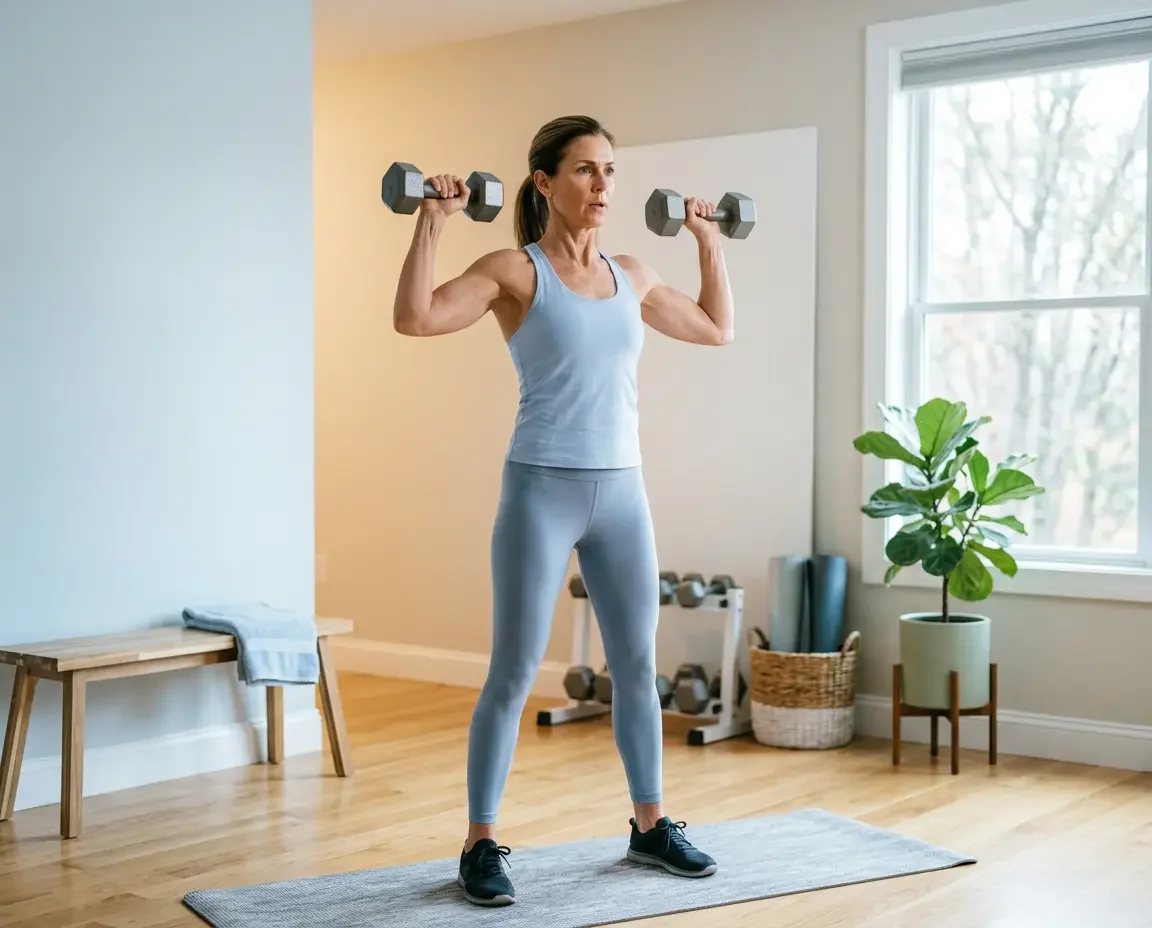
A woman's joints start hurting. She backs off her running, then her strength training, then the hikes. The reasoning is sound: things hurt, so she does less. But muscle is the shock absorber for every joint it crosses, and lean mass is already under pressure from falling estrogen. Less loading means less muscle, and less muscle means more joint pain, worse insulin sensitivity, more visceral fat, more inflammation, and lower bone density. Six months of sensible caution produces a woman who is measurably worse off than the one who walked in.
"The instinct to rest a painful joint is correct for an acute injury and almost exactly wrong for this. In midlife, the single most protective thing most of my patients can do for their joints is get stronger, with a program built around what actually hurts."
(This describes a common presentation pattern and is not drawn from an identifiable patient.)
What I Actually Do About It
Once inflammatory and metabolic causes have been addressed, the plan is unglamorous and it works:
Progressive resistance training, modified rather than abandoned. Load is the treatment, not the enemy. What changes is the selection of movements, the range, and the progression rate, usually with a physical therapist involved early rather than as a last resort.
Protein intake that actually supports muscle repair. Most midlife women I meet are eating for a body they had in their thirties.
Sleep, because tissue repair and pain threshold both depend on it, and perimenopause disrupts it precisely when it is most needed.
Addressing the metabolic layer, since inflammation, insulin resistance, and joint pain travel together. I covered the practical side of that in Metabolic Health in Midlife: How to Feel Strong, Clear, and Energized Again.
Bone density assessment on an appropriate timeline, since the same hormonal window drives accelerated bone loss.
Symptom management as a bridge, not a plan. Pain control has a role in getting you moving again. It is not the strategy.
A hormone therapy conversation where it is clinically appropriate, understood as a decision about your overall menopausal picture rather than a joint treatment. That is a longer discussion, and I walk through how it actually gets made in Concierge Hormone Therapy: How a Personalized Model Changes HRT Decisions.
If You Have Been Sent to Orthopedics One Joint at a Time
There is nothing wrong with orthopedics. A specialist evaluating a shoulder is doing their job well when they evaluate the shoulder. The gap is that nobody is holding the whole picture: the shoulder, the hands, the hips, your menopausal stage, your lean mass trend, your inflammatory markers, and your bone density, in one place, over time. That is internal medicine's job, and it takes more than a seven-minute visit to do.
If your joints changed and you have been told it is age, or exercise, or not enough exercise, come in and let us look at the pattern instead of the parts. If you would like help making that case at any appointment, I wrote a guide to advocating for yourself in the exam room.
To schedule a consultation at Elevated Health in Austin, call 512-759-6033 or visit sdmdelevatedhealth.com.
This article is for educational purposes and is not a substitute for individualized medical advice. New or worsening joint pain should be evaluated by your physician.